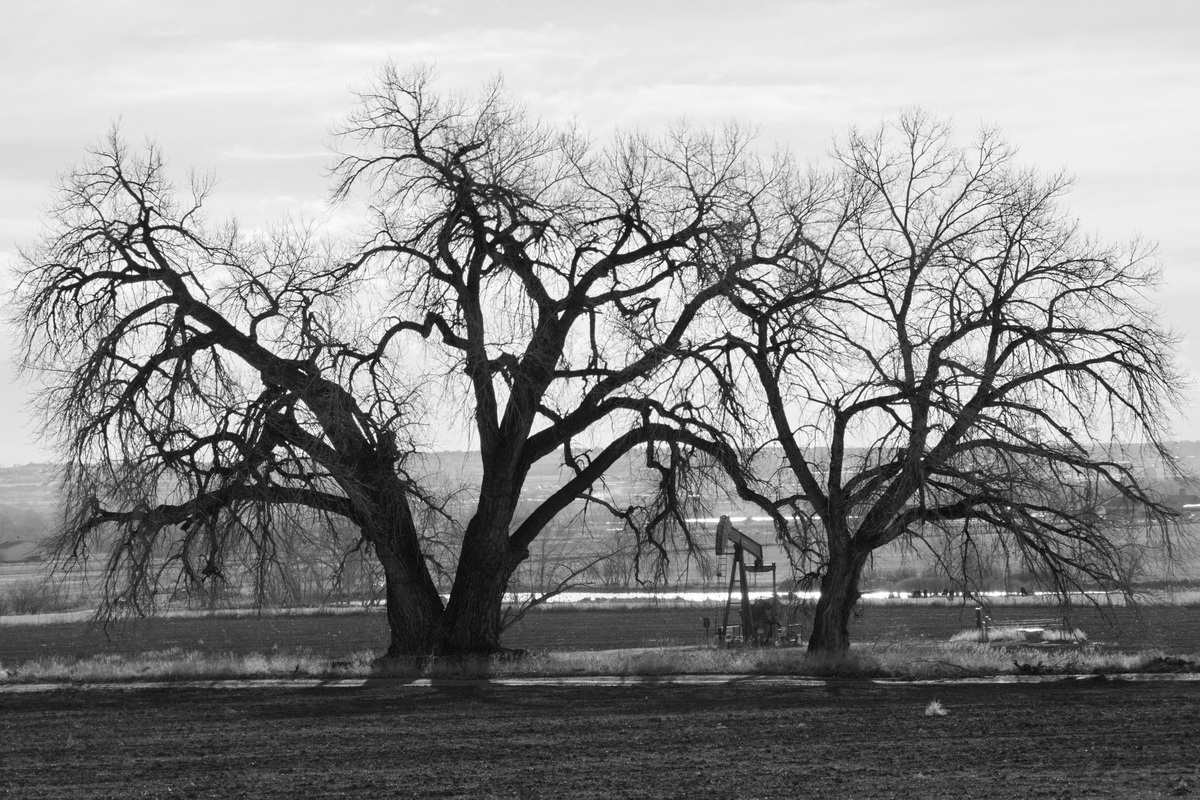
While we do shoot high resolution digital in full color, we believe that our vision will best be captured by old fashioned black and white film. Here's a few words about why.
Film is alive and growing! You could write a PhD dissertation on this topic and not cover all the reasons, motivations and passions. Here's our summary:
Our goal is to shoot all final images on large format film. Why? The short answer is that we like the process. After all, why does anyone go fishing? It’s not because they want a fish dinner, most of the time they don’t even keep what they worked so hard to catch. No, they like the process. Shooting film, especially large format (typically defined as 4x5 inches or larger), is definitely a process.
Part of that process is the intentionality that it forces upon us. Shooting film is a deliberate process! After all, great art takes time. None of the “spray and pray” that digital allows, promotes even, (taking lots of photos in automatic mode and hoping you get a good picture.) It slows us down, forces us to ask: “Is this worth the cost of the film?”
It also seems appropriate! Film has a distinct “look” that many digital cameras try to replicate. After all, many of the buildings we’re photographing were built before the first transistor was invented; some before the first vacuum tube!
That said, here are some technical reasons for shooting film.
Resolution: The scan of a large format negative (even 4x5) can easily surpass 100 Mbytes! Detail, gradation and dynamic range that cannot be matched by digital.
Permanence: Film last forever (almost). DVDs slowly die, hard drives crash and file formats go extinct. A properly processed negative can last for hundreds of years.
Artistic flexibility: our “view cameras” (like Ansel Adams used) allow for total control over the image. We can adjust the relationship between the film plane, the lens and the subject. This allow unmatched control of focus, perspective etc.


Now, you may think that we're doing this project in black and white to get that "retro" look. After all, photos from yesteryear are almost always black and white.
The real motivation goes deeper, much deeper. Again, we are sure that many dissertations have been written on this subject! We can only present a short summary.
1. Your brain prefers it. The human eye is an amazing video camera! (We'll skip the details, you can look them up if you're interested.) And the human brain is an equally amazing video processor, combining the continuous flow of images into 3D images. Unfortunately, the connection in-between is basically a dial-up modem. In fact, it can handle only about 10% of the data the eye sends out at a time. This is why you often find gray images more soothing. Your brain isn't working as hard to keep up with all the colors. (Yeah, we're simplifying things a bit but the concept is valid.)
2. Many artists prefer it. Monochrome reduces the image to its most basic form. The shapes and gradations are left unhindered by the complexity of color. This is both a blessing and a challenge. The artist must create an impactful image using just textures, shapes and shades of gray. They can't cheat by overwhelming us color. It forces them to play with light and shadow, emphasizing the metaphorical.
3. It severs the connection between art and reality. A color image simply replicates reality. Whereas, a black and white image leaves the artistic interpretation up to the viewer. The emphasis is on the contrast between light and shadow, the textures, shapes and leading lines. The most obvious example is the artistic nude. (Again, a complicated subject that won't be resolved here!) A color photograph of a nude is often just a picture of a nude. Whereas a black and white photo, depending on the pose, lighting and setting, often breaks the viewer away from reality and emphasizes the humanity, femininity or natural beauty of the subject.